How Lack of Sleep Affects Insulin Resistance

You’re eating more protein. You’re being mindful of your portions. You’re strength training and trying to make better choices.
But you’re still exhausted, craving sugar, holding weight around your stomach and wondering why your body isn’t responding the way you think it should.
Before cutting your calories, removing more carbs or adding another workout, we need to talk about sleep.
Because sleep doesn’t just affect your energy. It can also affect your appetite, your blood sugar and how well your body responds to insulin.
Your metabolism can change before your weight does
In one study, researchers followed 38 women between the ages of 20 and 75 who normally slept 7-9 hours per night.
For six weeks, the women followed their normal sleep schedule. During another six-week period, they went to bed 90 minutes later while keeping their usual wake time.
That brought their average sleep down to approximately 6.2 hours per night.
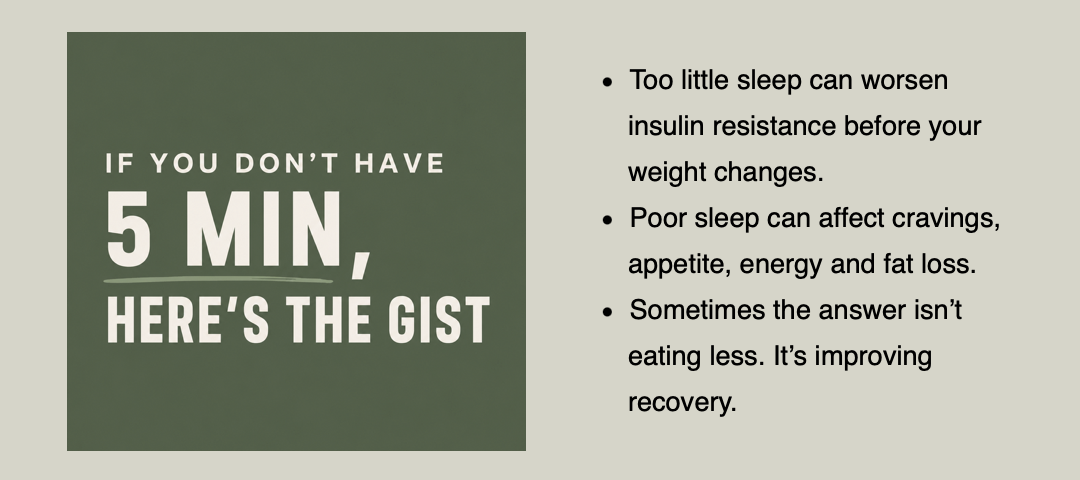
After six weeks of less sleep, their insulin resistance increased by nearly 15%. The effect was even greater in postmenopausal women.
And here’s the part that really matters: This happened without significant changes in their weight or body fat.
Their bodies became less efficient at handling blood sugar before anything changed on the scale. (Read the study)
What does insulin resistance actually mean?
Insulin is a hormone that helps move glucose out of your bloodstream and into your cells, where it can be used for energy.
When your cells stop responding to insulin as well as they should, your body has to release more insulin to get the job done.
Your blood sugar may still look “normal” for a while because your body is working harder and producing more insulin to keep it there.
Over time, this can contribute to:
- Stronger cravings
- Energy crashes after eating
- Feeling hungry again shortly after a meal
- Higher fasting insulin or glucose
- Increased fat storage
- Difficulty using stored fat for energy
- More stubborn weight around the midsection
- A higher risk of prediabetes and type 2 diabetes
This doesn’t mean that one bad night immediately makes you insulin resistant.
But if you’re regularly getting around six hours of sleep, it may be adding another layer of metabolic stress and making your nutrition and training efforts feel harder than they should.
Poor sleep can also make you hungrier
Sleep doesn’t only affect how your body handles the food you eat. It may also affect how much you want to eat in the first place.
In another study, adults who were overweight who normally slept fewer than 6.5 hours per night were given personalized support to help them sleep longer.
They increased their sleep by approximately 1.2 hours per night and ended up eating an average of 270 fewer calories per day than the group that kept its normal sleep schedule.
They weren’t put on a diet or given a new workout plan. They simply worked on extending their sleep. (Read the study)
That doesn’t mean everyone who sleeps longer will automatically eat fewer calories.
But it does show us that sleep can influence appetite and food intake in real life.
So if you feel ravenous, snacky or obsessed with sugar after a terrible night, it isn’t necessarily a lack of discipline.
Your body is tired, your appetite signals may be different and quick energy suddenly sounds much more appealing.
What about cortisol?
Cortisol gets blamed for almost everything online, especially belly fat.
The truth is a little more complicated.
Poor sleep can put more stress on the body and interfere with the systems involved in appetite, blood sugar and your sleep-wake cycle. Cortisol may be part of that picture, but we can’t automatically blame every craving, bad night or extra pound around the middle on “high cortisol.”
We also don’t need to diagnose you with “cortisol belly” to recognize that chronic stress and inadequate sleep can make your health and weight-loss goals harder.
The bigger point is that your body doesn’t separate nutrition, sleep, stress and exercise into completely different categories. They all affect one another.
Why this matters even more with PCOS
Insulin resistance is common in PCOS, including in some women who aren’t overweight.
When insulin is consistently elevated, it can also affect hormone production and may contribute to symptoms such as:
- Irregular periods
- Difficulty ovulating
- Acne
- Facial hair
- Increased hunger or cravings
- Weight-loss resistance
Sleep is not the sole cause of PCOS, and improving your sleep isn’t a cure.
But if insulin resistance is already part of your PCOS picture, consistently sleeping too little may make it even harder for your body to regulate blood sugar and manage symptoms.
Sleep concerns are important enough that the international evidence-based PCOS guideline recommends assessing women with PCOS for symptoms of obstructive sleep apnea, especially when they report snoring along with waking unrefreshed, daytime sleepiness or fatigue. (Read the PCOS guideline)
Before you cut your food again, look at your sleep
Ask yourself:
- Am I regularly getting fewer than seven hours of sleep?
- Is my bedtime different every night?
- Do I wake up multiple times?
- Am I staying up late even when I’m exhausted?
- Is late caffeine affecting my ability to fall asleep?
- Do I wake up tired even after spending enough time in bed?
- Do I snore, wake up with headaches or feel unusually sleepy during the day?
That last group of symptoms matters.
If you’re spending enough time in bed but still waking up exhausted, getting more sleep may not be the entire answer. Loud snoring, gasping during sleep, morning headaches and significant daytime sleepiness can be signs that it’s worth talking to your healthcare provider about a possible sleep disorder.
Try this this week
You don’t need to completely overhaul your life tonight.
Start by choosing one realistic change:
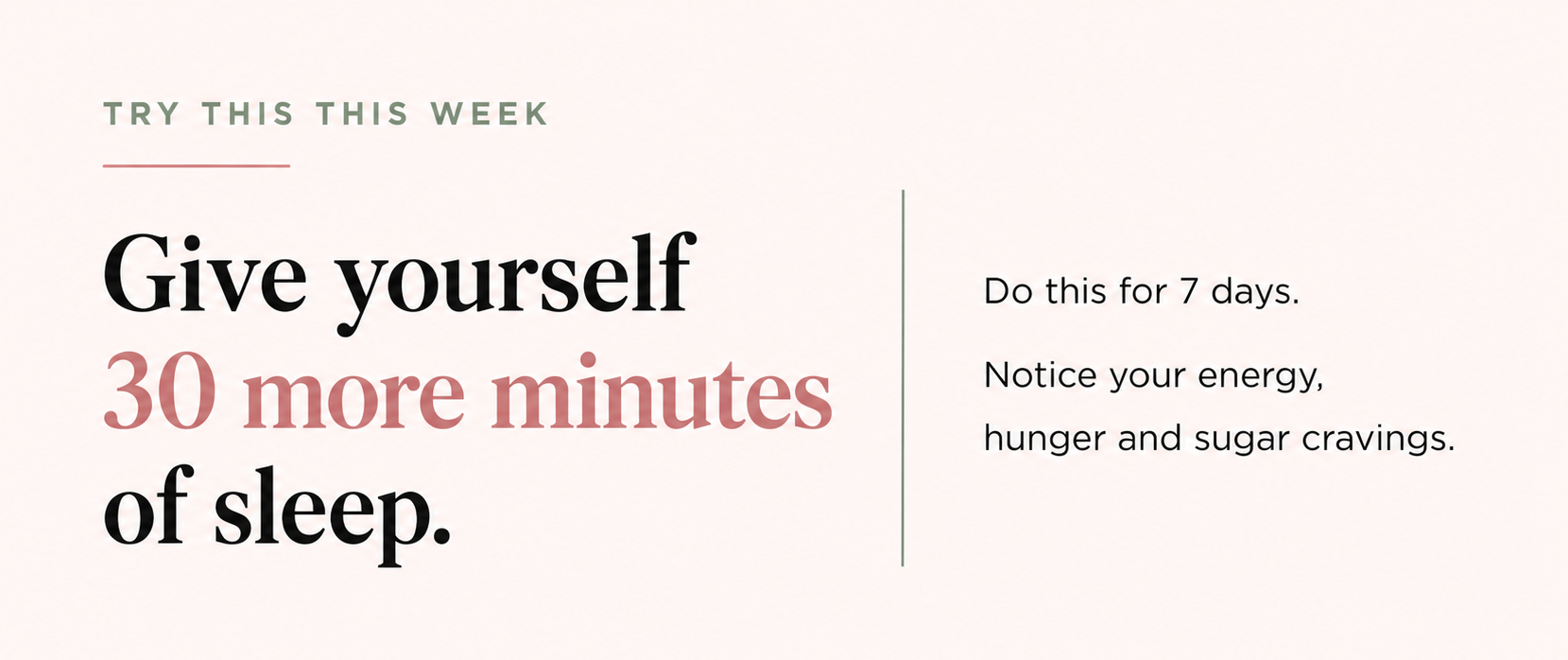
- Move bedtime 20-30 minutes earlier.
- Set an alarm that reminds you to start getting ready for bed.
- Keep your wake time as consistent as possible.
- Move your last caffeinated drink earlier in the day.
- Stop scrolling in bed.
- Create a short routine that helps your body recognize that the day is ending.
- Get outside in the morning for natural light.
- Keep your bedroom cool, dark and quiet.
And most importantly, treat sleep like part of your health plan, not something you’ll focus on after your nutrition and workouts are perfect.
The takeaway
If your progress has stalled, the answer isn’t automatically:
Eat less.
Remove more carbs.
Train harder.
Add another supplement.
Sometimes we need to step back and ask whether your body is getting enough recovery to respond to the work you’re already doing.
Nutrition and strength training still matter. Calories still matter. Your food choices still matter.
But they aren’t happening in a vacuum.
Your sleep can affect your appetite, insulin sensitivity, energy and ability to follow through with the habits you’re trying to build.
So if you’re doing “everything right” and still struggling, don’t automatically assume you need to try harder.
You may need a better look at the full picture.
Inside my coaching, we connect the dots between your nutrition, training, sleep, stress, symptoms and labs when appropriate. Then we build a strategy around what your body actually needs.
If you’re tired of guessing and ready for a clear, personalized plan, apply for coaching and let's chat.